

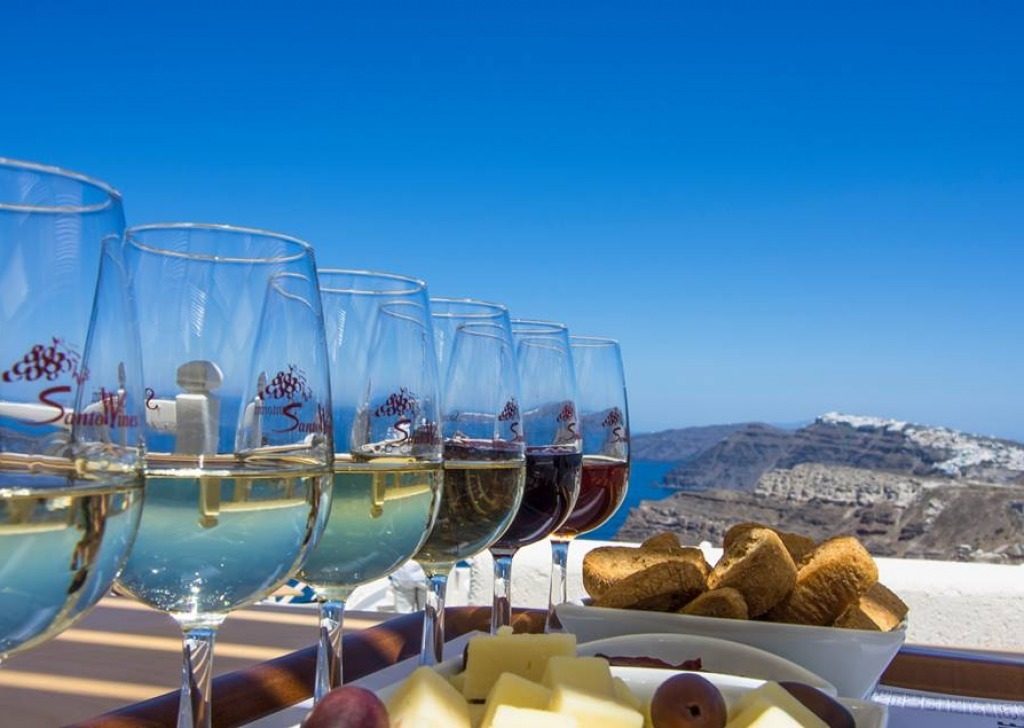
Quick answer
Santorini wineries to visit are open daily from 09:00 to 22:00, including Santo Wines in Pyrgos Kallistis, with free entry to grounds and wine tastings priced per session. Arriving between 09:00 and 16:00 avoids peak sunset crowds and large tour groups. The island's volcanic terroir produces Assyrtiko, Aidani, and Vinsanto wines that reflect centuries of ungrafted vine cultivation in ash and pumice.
Santorini's volcanic soil produces wines that cannot be replicated anywhere else in the Mediterranean. The island's vineyards grow on pure volcanic ash and pumice, forcing roots deep into porous rock where phylloxera cannot survive. Vines here are ungrafted and centuries old, twisted into low basket shapes that shield clusters from relentless Aegean winds. The result is Assyrtiko with razor-sharp minerality, Aidani with floral aromatics, and Vinsanto aged in barrel for years until it tastes of sun-dried figs and honey. Santo Wines anchors the island's winemaking identity from its perch above the caldera in Pyrgos. The estate operates as a cooperative representing local growers, maintaining traditional cultivation methods while modernizing production and visitor infrastructure. Tastings span entry-level flights to vertical Vinsanto comparisons, each glass poured against a backdrop of the submerged volcano and Thirasia across the water. The estate's grounds are free to enter, allowing visitors to walk the terraces and production areas before committing to a tasting session. Other estates dot the island's interior, many family-run and focused on single-varietal expressions. Gavalas Winery in Megalochori cultivates indigenous varieties using pre-phylloxera rootstock. Venetsanos Winery occupies a cliffside platform in Megalochori with gravity-flow architecture dating to 1947. Argyros Estate in Episkopi Gonia farms some of the island's oldest vines, producing benchmark Assyrtiko from ungrafted plants over a century old. Each estate interprets the volcanic terroir differently, but all share the same raw material: wind, ash, and vines that predate modern viticulture. Timing shapes the experience. Mornings bring cooler temperatures and smaller groups, ideal for focused tasting without distraction. Late afternoons fill with sunset-chasing tours, transforming quiet terraces into crowded viewing platforms. Santorini wineries to visit reward early arrivals with space to ask questions, walk the vineyards, and taste without rushing. The caldera will still be there at closing time, but the winemaker might not.
“Santorini's vines grow ungrafted in volcanic ash, producing wines that taste of wind, pumice, and centuries of isolation.”
The Best Time for Santorini Wineries to Visit
The best arrival window for Santorini wineries is 09:00–16:00, which allows visitors to experience the facilities before peak sunset crowds and large tour groups arrive. Planning your visit during this time ensures more space and direct access to staff.
April–May
Moderate crowdsMild 18°C–22°C; pleasant for tastings.
Spring offers manageable visitor numbers before the high season surge.
June–August
High volumeWarm 25°C–30°C; requires shade.
Peak summer months experience heavy traffic; arrival at 09:00 is essential.
September–October
Moderate to highWarm 20°C–26°C; cooling breezes.
Early autumn remains busy, but mid-day visits provide a quieter atmosphere.
Weekday mornings
Minimal congestion—
Visiting between Monday and Thursday mornings significantly reduces wait times for tours.
Verdict: The most strategic time to visit is from Monday to Thursday, arriving between 09:00 and 16:00 during the months of April or October.
Santorini Wineries to Visit: Opening Hours
The winery maintains a consistent daily schedule throughout the week to accommodate visitors. You can plan your visit at your convenience during these set hours.
| Monday | 09:00–22:00 | |
|---|---|---|
| Tuesday | 09:00–22:00 | |
| Wednesday | 09:00–22:00 | |
| Thursday | 09:00–22:00 | |
| Friday | 09:00–22:00 | |
| Saturday | 09:00–22:00 | |
| Sunday | 09:00–22:00 |
Understanding Costs at Santorini Wineries to Visit
Entrance to the winery grounds is free for all visitors. Costs for wine tastings and guided tours are calculated individually based on the specific selections made during your visit.
A typical adult pays 0 EUR for entry, with total costs depending solely on the specific tastings or tours selected.
Getting to Santorini Wineries to Visit
The winery is located in Pyrgos Kallistis, 847 00, Santorini, Greece. The most straightforward approach is by car, taxi, or local bus services that connect major island hubs to the Pyrgos area.
Follow the main road towards Pyrgos Kallistis; parking is available on-site
Request transport to the winery entrance in Pyrgos Kallistis
Take the KTEL bus from Fira towards Pyrgos/Perissa and disembark at the Pyrgos junction
Photogenic Views at Santorini Wineries to Visit
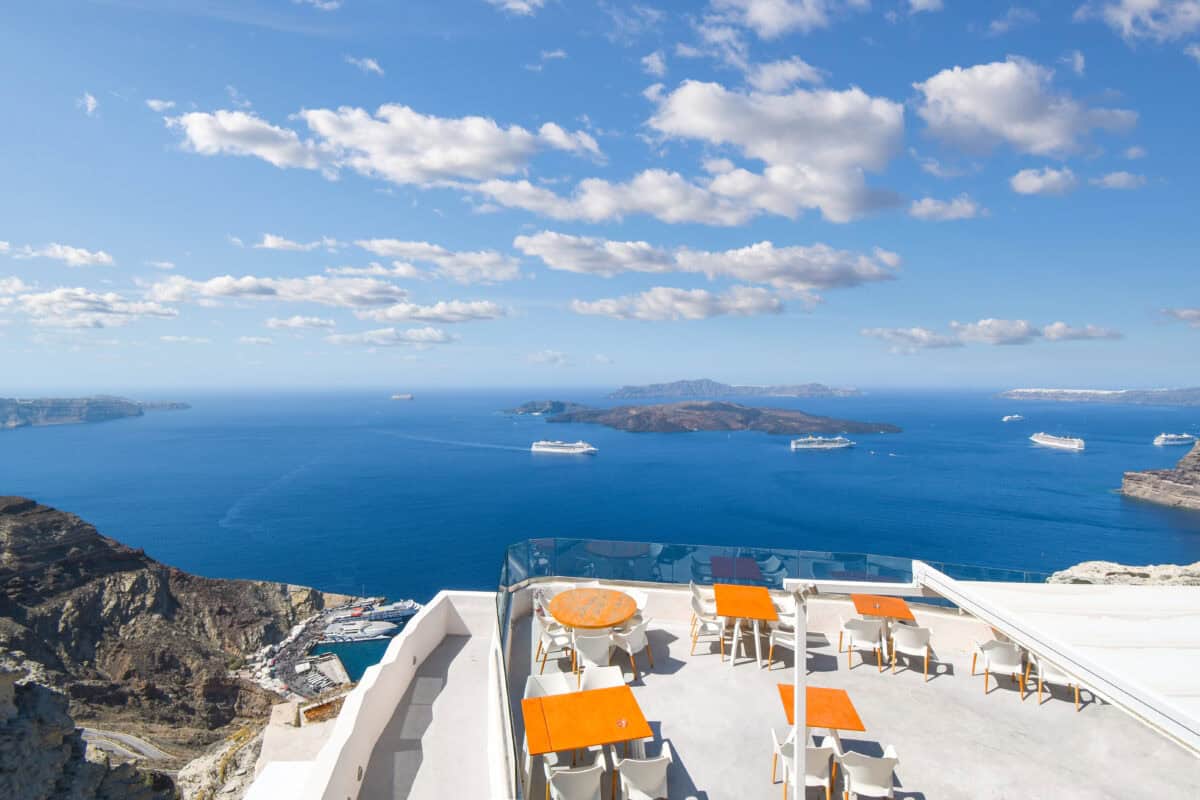
Caldera Terrace Edge
The wide stone terrace offers an unobstructed view of the volcanic cliffs and the Aegean Sea. Capture this angle during the morning to avoid shadows on the caldera wall.
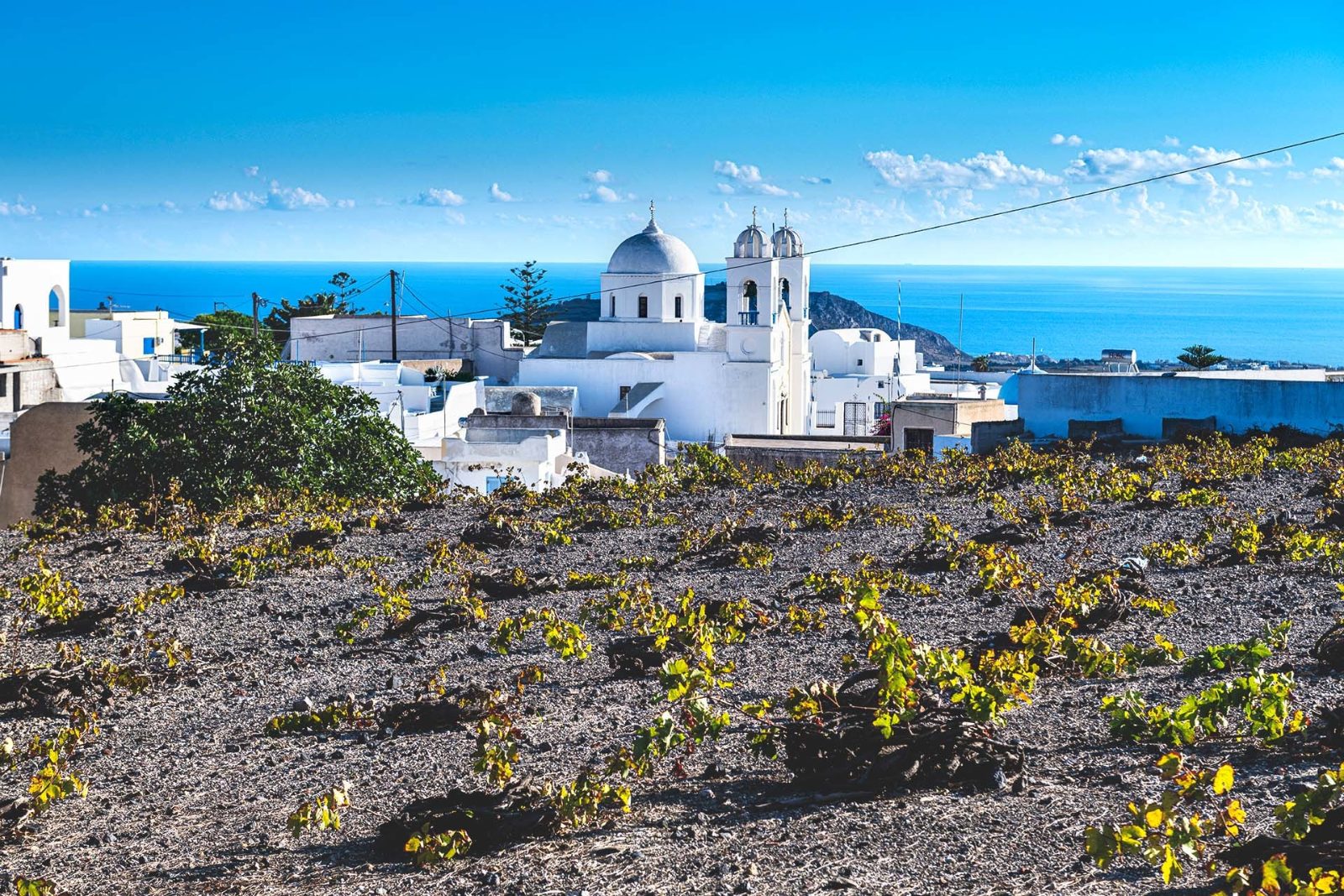
Vineyard Stone Path
This path winds through the low-growing Assyrtiko vines with the village of Pyrgos visible in the distance. The geometric patterns of the traditional basket vines provide a structured composition.
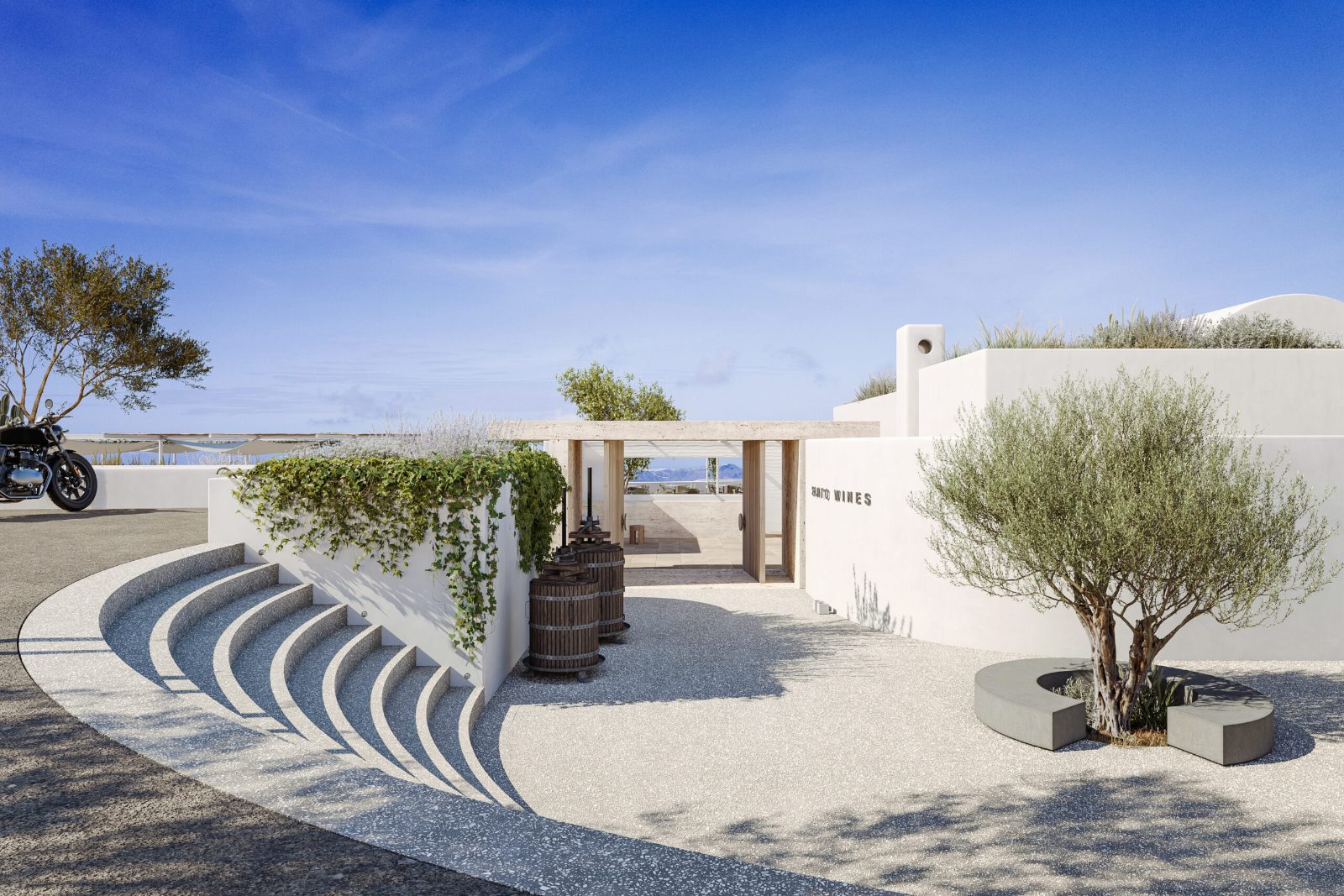
Main Entrance Staircase
The white-washed exterior steps leading to the winery entrance frame the stark architectural contrast against the blue sky. Use a wide lens to capture the clean lines of the stairs.
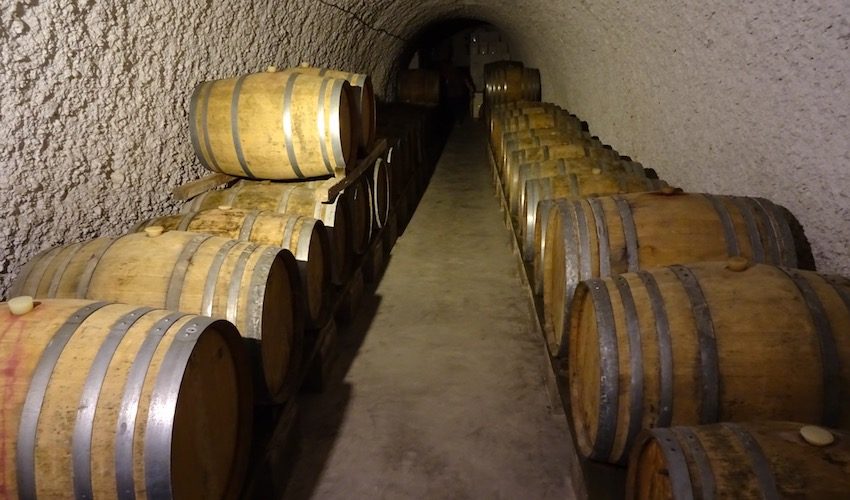
Barrel Room Reflection
The interior cellar features rows of oak barrels that create leading lines for symmetric photography. Access is permitted during guided tours when the lighting is controlled.
Essential Tips for Santorini Wineries to Visit
Navigating the volcanic viticulture of Santorini requires strategic planning to appreciate the nuances of the local Assyrtiko grape.
Book tastings ahead
Reservations for formal tastings are recommended to ensure availability, particularly for smaller estates that limit guest numbers per slot.
Inquire about harvest
Ask staff specifically about the timing of the annual harvest, as visiting during late summer offers a chance to see the basket-shaped training method, known as kouloura, in action.
Focus on indigenous varieties
Prioritize tasting flights that feature Assyrtiko, Aidani, and Athiri, as these grapes are uniquely adapted to the island's arid, pumice-rich soil.
Palate preparation
Avoid wearing strong perfumes or scented lotions when visiting, as the environment emphasizes the mineral and saline aromatics of the wines.
Understand vine age
Ask if the wine was produced from vines older than 50 years, as these plants have deeper roots that significantly influence the flavor profile compared to younger vines.
Shipping logistics
Check with the winery staff regarding on-site shipping services before your visit if you intend to send multiple bottles home, as international regulations vary.
Check availability
Frequently asked questions about santorini wineries to visit
Everything you need to know about santorini wineries to visit