9 hr
Santorini Full-Day Tour with Wine Tasting & Oia Sunset
- Expert local guide
- Small group
- Skip-the-line access
- Free cancellation
Santorini Wine and Food Tour — Winery Visits & Sunset Tastings
Volcanic terroir meets Aegean tradition, reserve your cellar-to-caldera experience
Compare fares, pick the fit — all bookings are mobile-voucher and eligible for free cancellation where shown.
9 hr
5 hr
5 hr
Choosing a santorini wine and food tour allows visitors to explore the island's unique volcanic terroir and historic basket-trained vines. Whether you seek a guided excursion or a flexible independent visit to a local winery, these options provide distinct ways to experience the region's renowned PDO Assyrtiko and Vinsanto.
|
Top pick Guided Wine Tour Group/Private Packages |
Independent Winery Visit Self-Guided Access | |
|---|---|---|
| Access Method | Scheduled transport with sommelier | Individual entry via car or taxi |
| Inclusions | Guided tastings, food pairings, transport | Tasting flight per winery selection |
| Wait Time | Pre-booked; no wait | Varies by winery arrival time |
| Vineyard Experience | Included sommelier-led walk | Usually restricted to tasting areas |
| Best for | First-timers and social groups | Independent travelers and wine enthusiasts |
| See tickets & prices |
Verdict: For the most comprehensive santorini wine and food tour experience, a guided group or private package is recommended to handle complex island logistics.
Worth it for hassle-free vineyard immersion
A santorini wine and food tour solves the island's biggest logistics headache: navigating scattered wineries without a car while avoiding drunk-driving risk. Independent winery visits cost €15–30 per tasting, plus rental car fees and fuel—guided tours bundle transport, curated tastings at three to five estates, and food pairings for comparable or lower total spend. The Santorini Wine Discovery option covers three celebrated wineries with sommelier context you'd miss solo; sunset-focused tours like the Small-Group Sunset Wine Experience add Oia views but compress tasting time. You're paying for convenience and cohesive narrative—local guides explain volcanic soil's impact on Assyrtiko character and traditional basket-vine cultivation—not just samples. Tours eliminate guesswork about which estates merit the drive and handle reservations during peak summer capacity constraints. Solo explorers comfortable driving and pre-booking their own tastings can skip the group format, but most visitors find the curated experience and zero navigation stress worth the premium.
Bottom line: Book if you value logistics convenience and expert curation over self-directed exploration—the value math favors guided santorini wine and food tour tickets for most travelers.
Guided excursions are ideal for stress-free logistics, while self-guided visits allow for personalized pacing at your preferred Aegean landmarks.
|
Top pick Guided Wine Tours |
Self-Guided Tasting | |
|---|---|---|
| Logistics | Pre-arranged transport included | Requires taxis or bus planning |
| Duration | 4–5 hours typically | Varies by individual pace |
| Winery count | Multiple locations per trip | Choice of single or multiple |
| Expertise | Professional sommelier-led | Educational signage or staff |
| Food pairings | Included with most tastings | Available for separate purchase |
| Flexibility | Fixed schedule | Full control over itinerary |
| Price range | 60–160 EUR per person | 15–50 EUR per flight |
| Best for | Comprehensive island insights | Deep dives into specific estates |
| See tickets & prices |
Verdict: Choose a guided santorini wine and food tour if you prioritize seamless transportation between venues, or opt for a self-guided visit if you prefer spending extra time at specific locations.
Hand-picked experiences loved by thousands of travelers
4 to 4.5 hours
Free Cancellation
Explore three celebrated wineries, sample a dozen Greek varietals, and watch the sun set over volcanic cliffs
4 hours
Free Cancellation
Journey through volcanic vineyards and sample a dozen wines at three premier estates with local bites
4.5 hours
Free Cancellation
Explore three renowned wineries across Santorini's volcanic landscape with guided tastings of 12 regional wines
3 hours
Free Cancellation
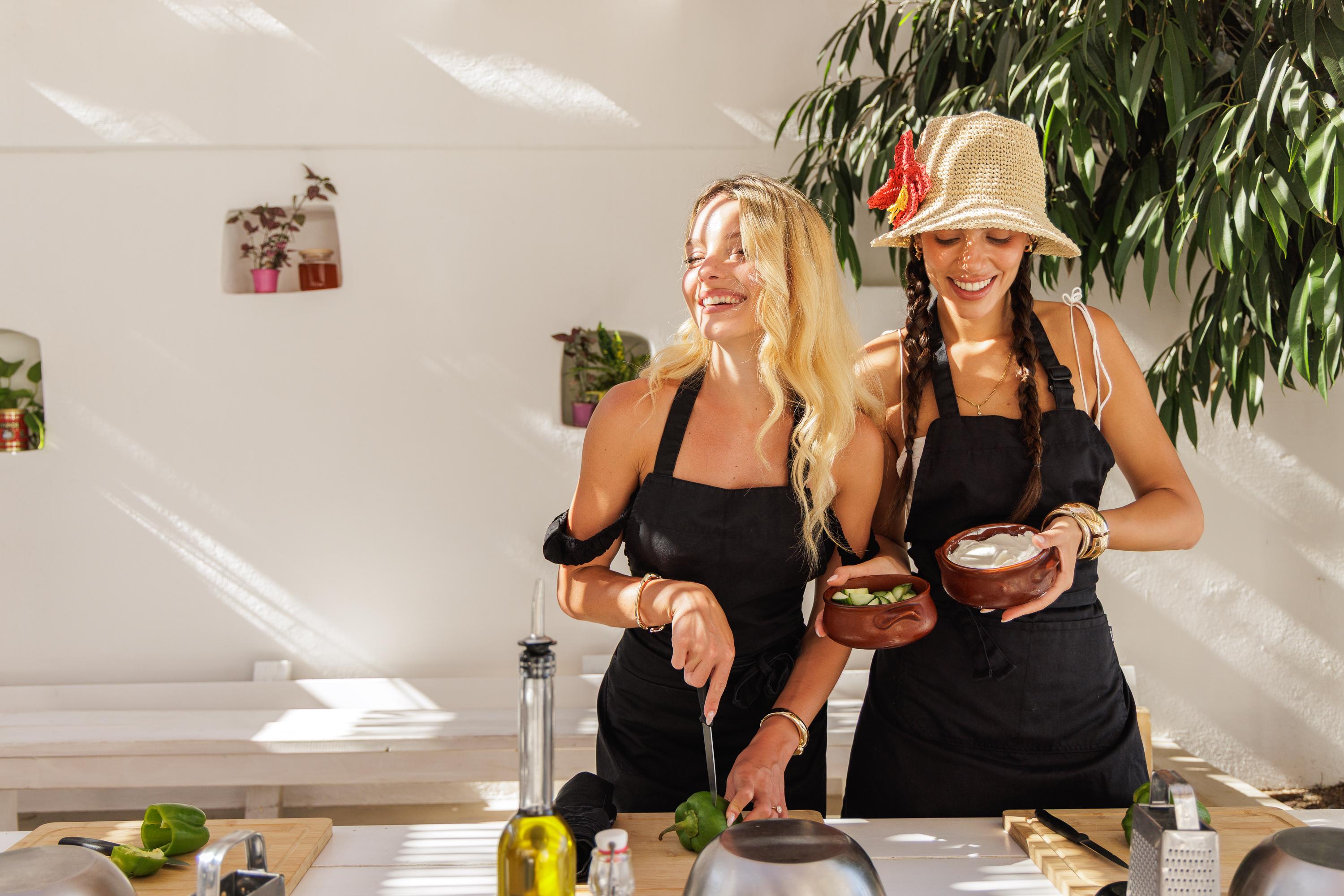
Master traditional Greek recipes at a beachfront venue, then feast on your creations with Santorini wine
4 hours
Free Cancellation
Savor Santorini's flavors on a 4-hour culinary journey through Fira's scenic caldera paths
3 hours
Free Cancellation
Discover the volcanic terroir of Santorini through guided tours and tastings at three distinctive island wineries.
4 hours
Free Cancellation
Explore volcanic vineyards and sample 10 local wines with expert sommeliers at traditional island wineries
5 hours
Free Cancellation
Discover Santorini's iconic villages, volcanic beaches, and sweeping caldera vistas on this personalized private tour
Built into the cliffside, this winery offers panoramic caldera views and historic gravity-fed production methods.
Known for ancient vines, this estate focuses on Assyrtiko grapes and traditional cultivation techniques.
One of the largest facilities, providing extensive tasting flights and local food pairings.
Located in a cave-like setting, this winery is famous for its unique subterranean cellar and organic practices.
Situated in the plains of Oia, this estate combines traditional winemaking with modern culinary excellence.
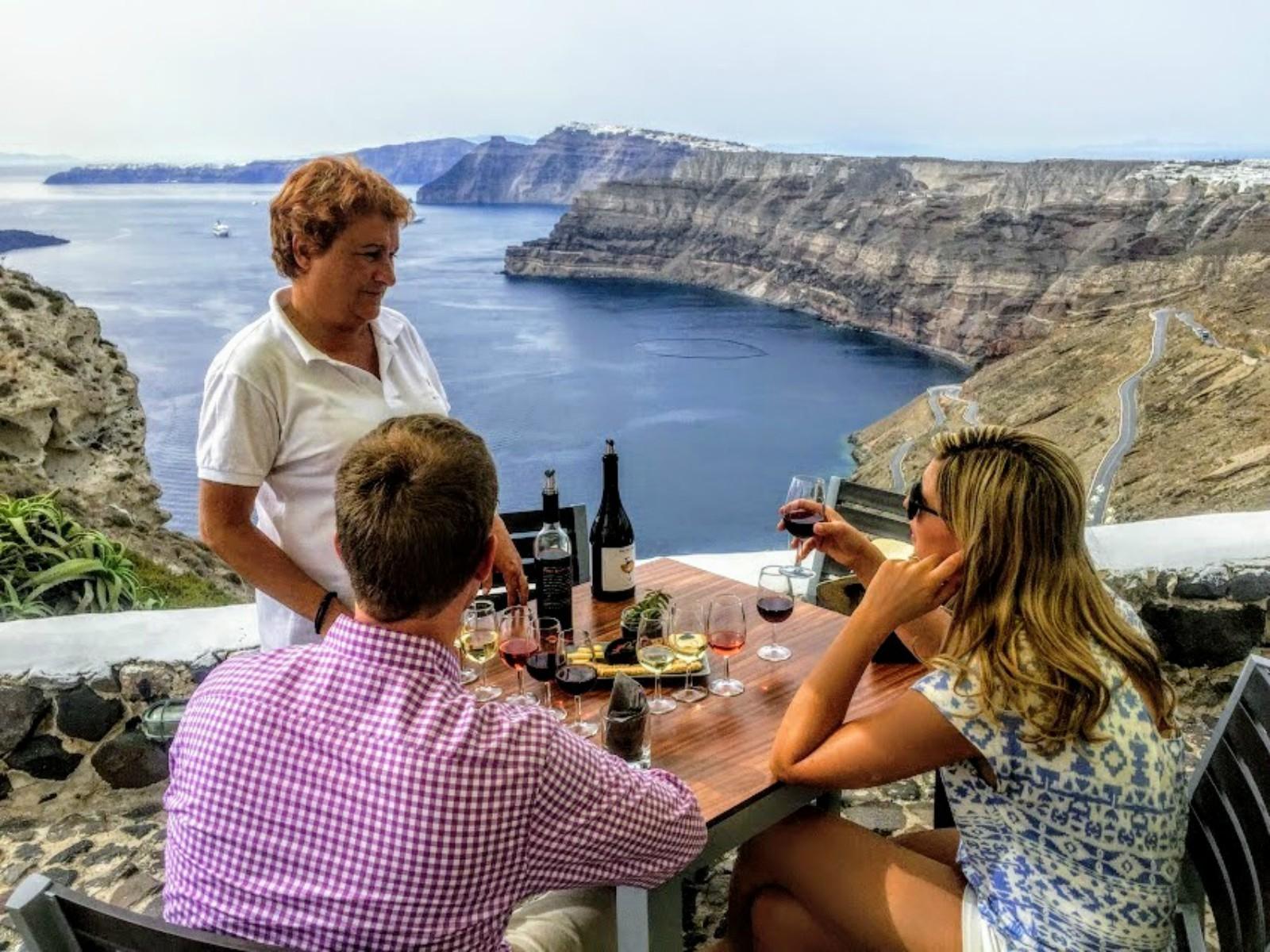
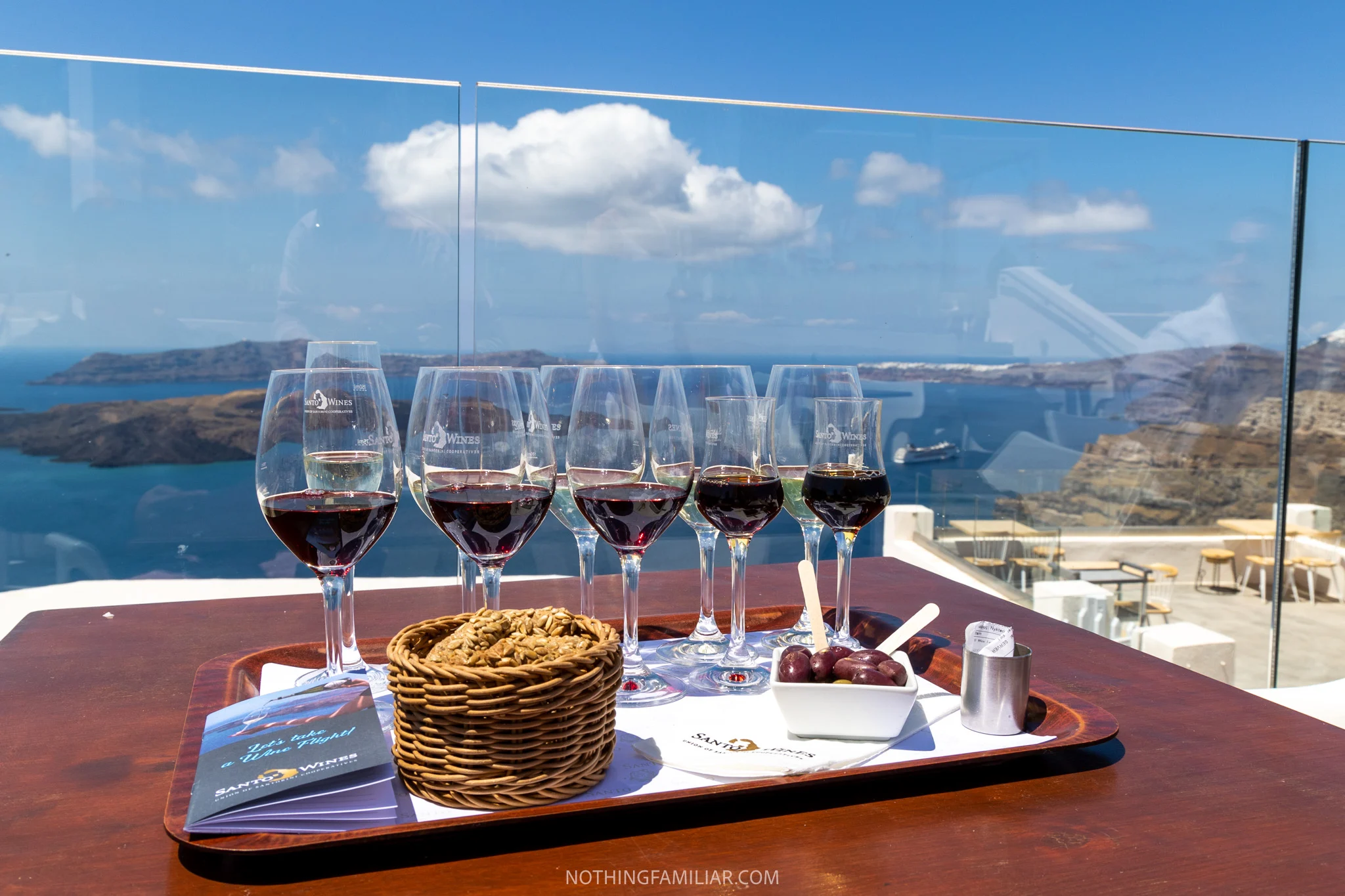
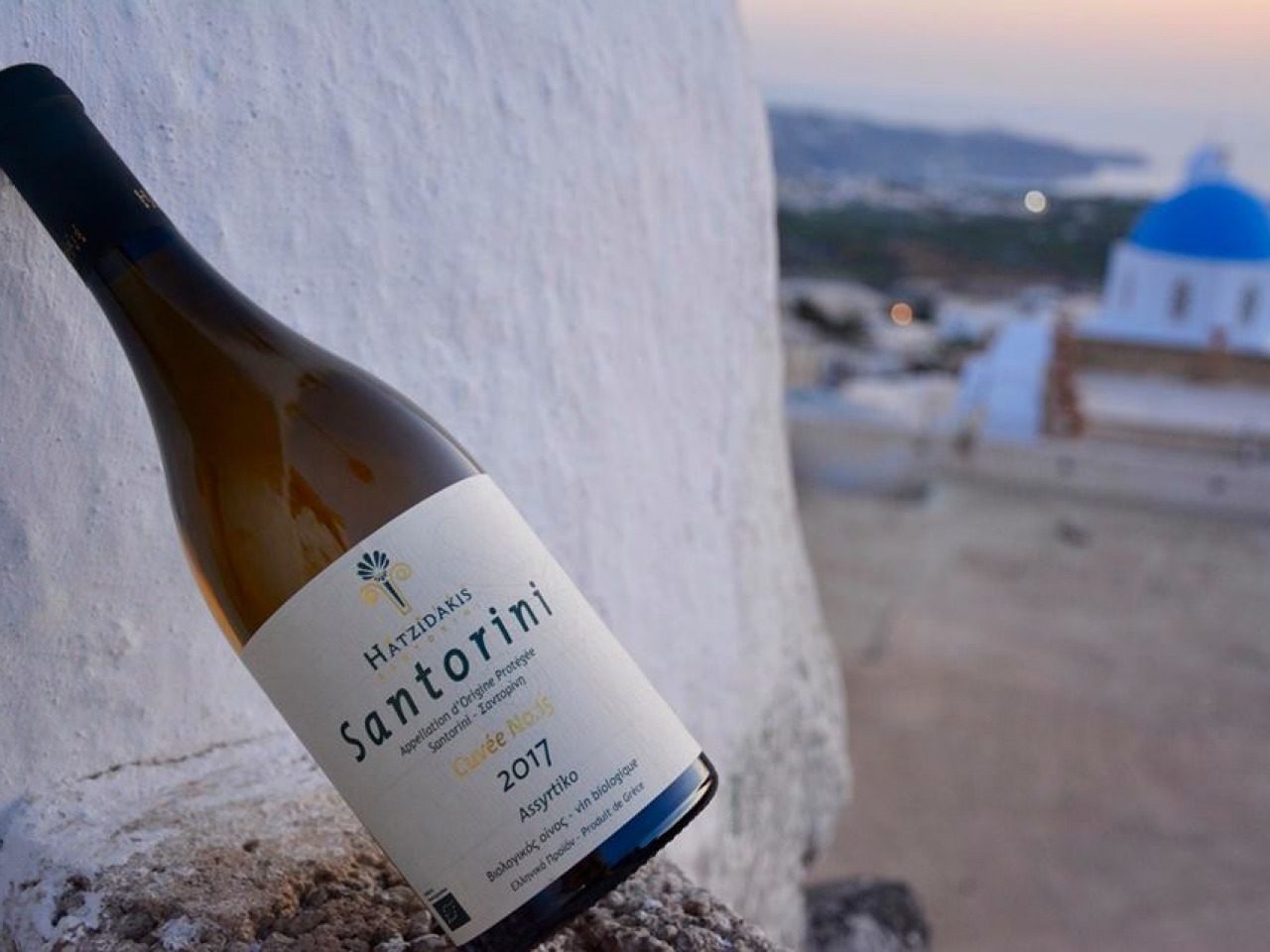
You arrive at Santo Wines mid-morning, the caldera spreading three hundred meters below the terrace where a host pours chilled Assyrtiko into stemware etched with the cooperative's logo. The wine tastes of lemon peel and sea spray, its acidity cutting through the September heat.
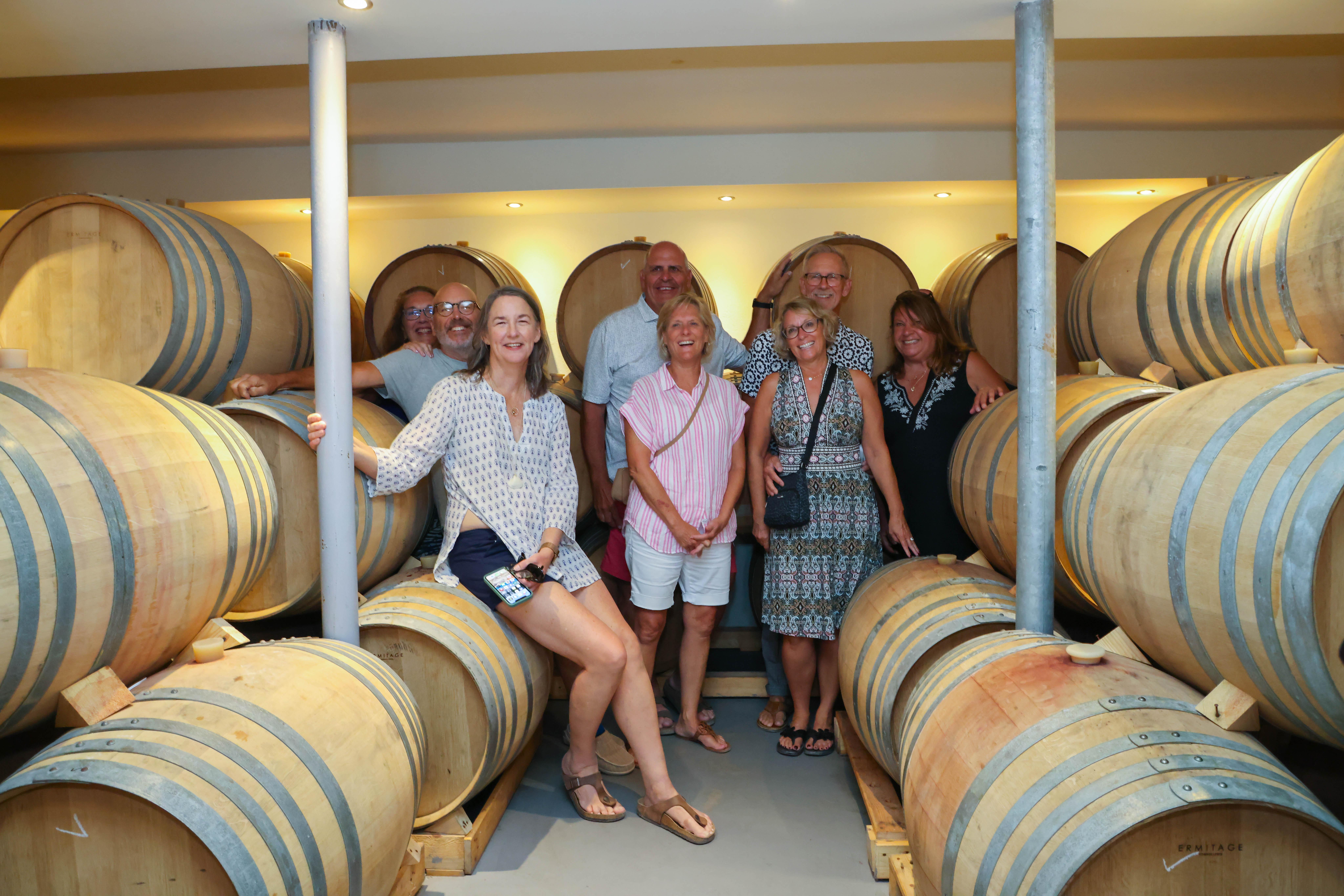
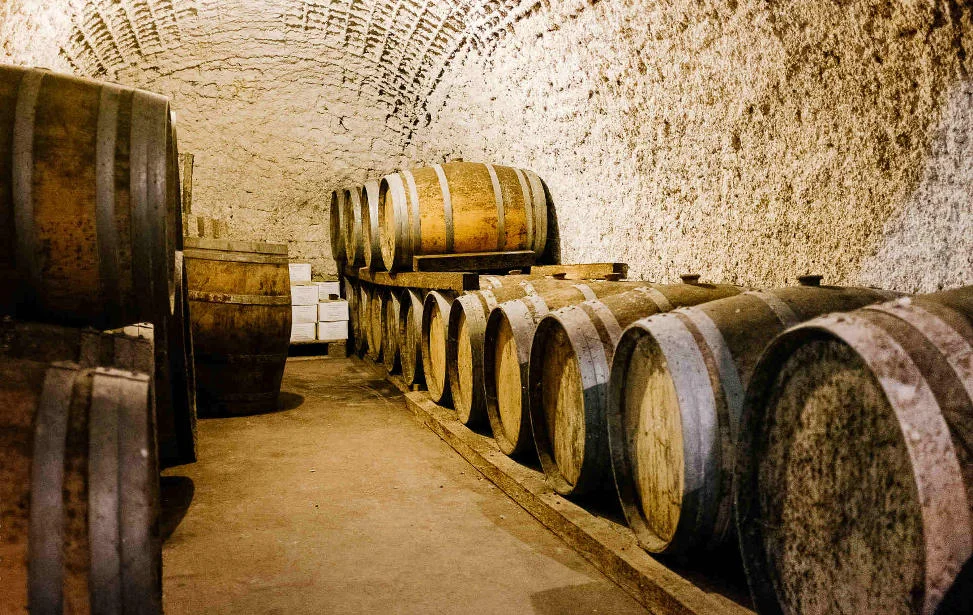
You move inside to barrels stacked in a climate-controlled hall, the guide explaining how volcanic ash prevents phylloxera while you sample a barrel-aged Nykteri, its oak notes balanced by mineral sharpness.
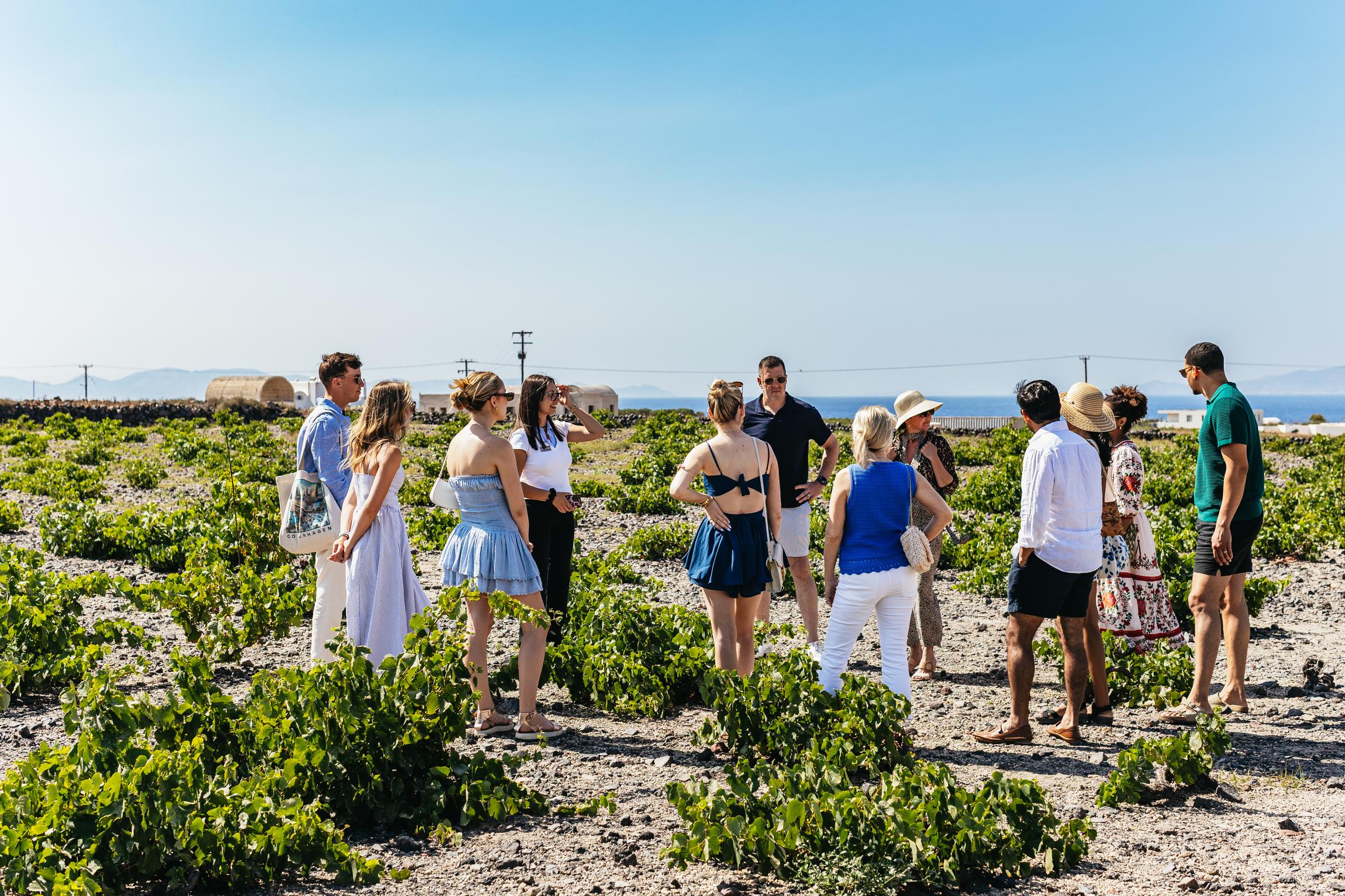
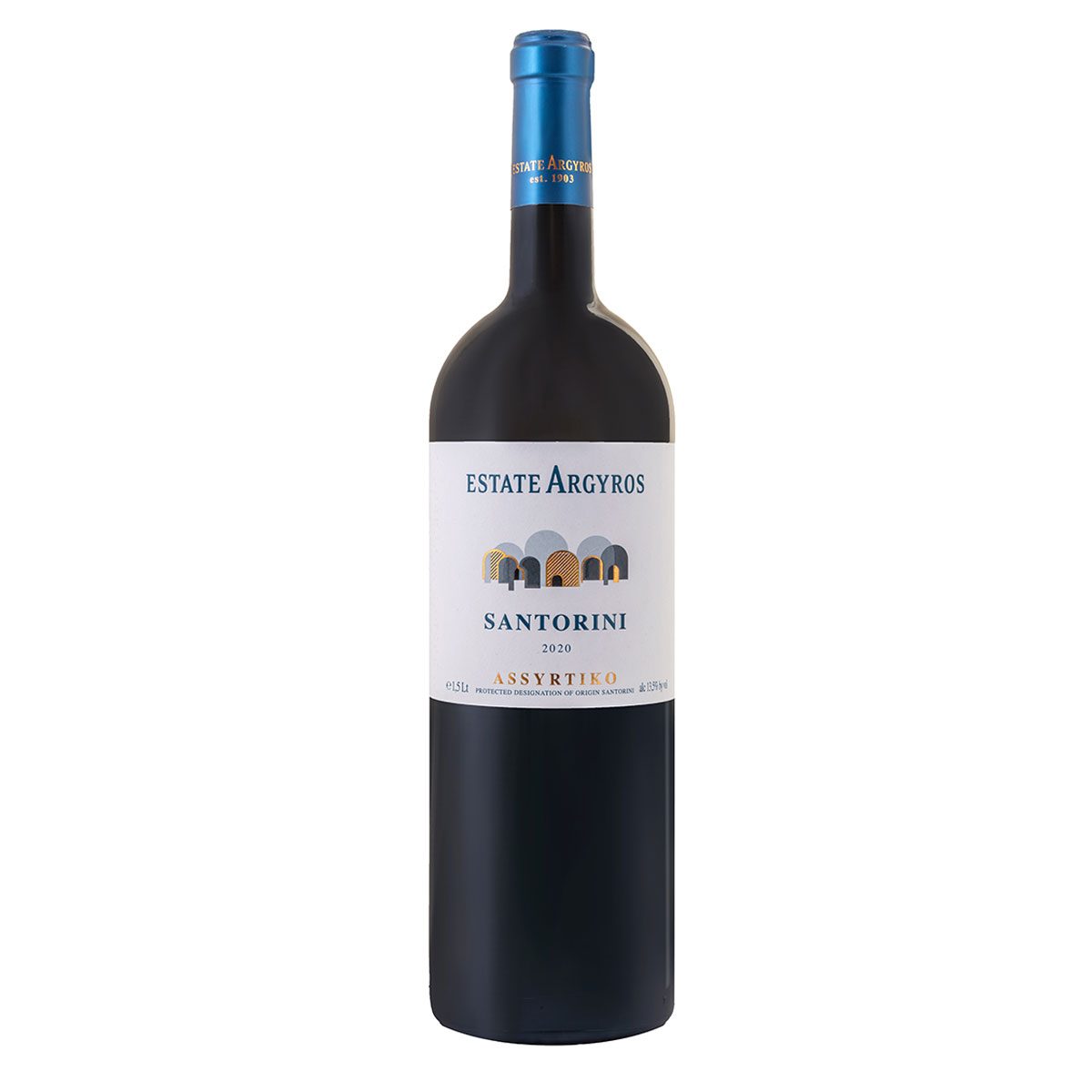
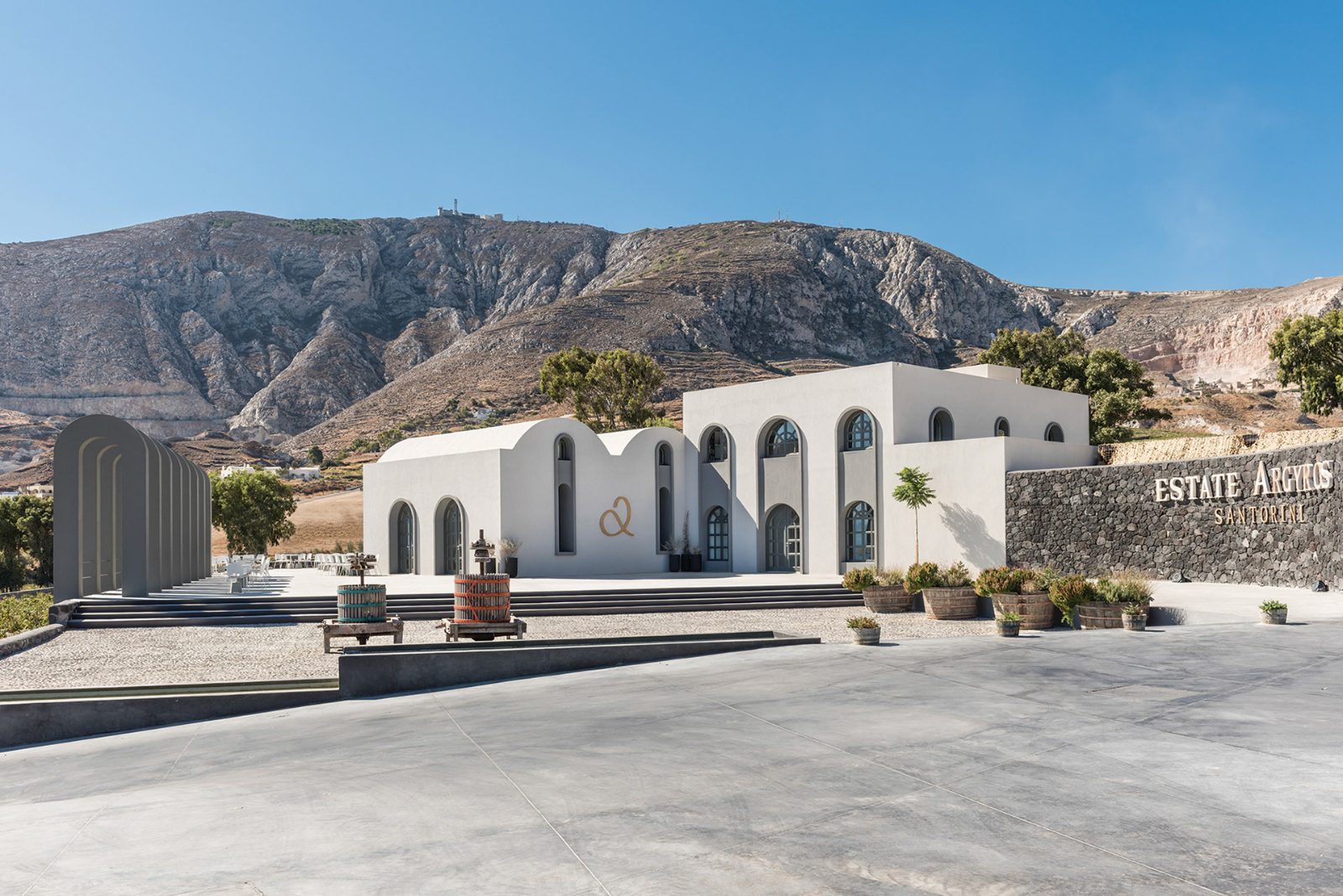
The van climbs to Estate Argyros in Episkopi Gonia, where kouloura vines twist in perfect spirals across fields dusted gray with pumice. You descend into stone cellars, their walls cool and damp, and taste a single-vineyard Assyrtiko alongside fava dip and sun-dried tomatoes. The winemaker points to a map showing vineyard parcels, each numbered and color-coded by age — some plots date to 1850.
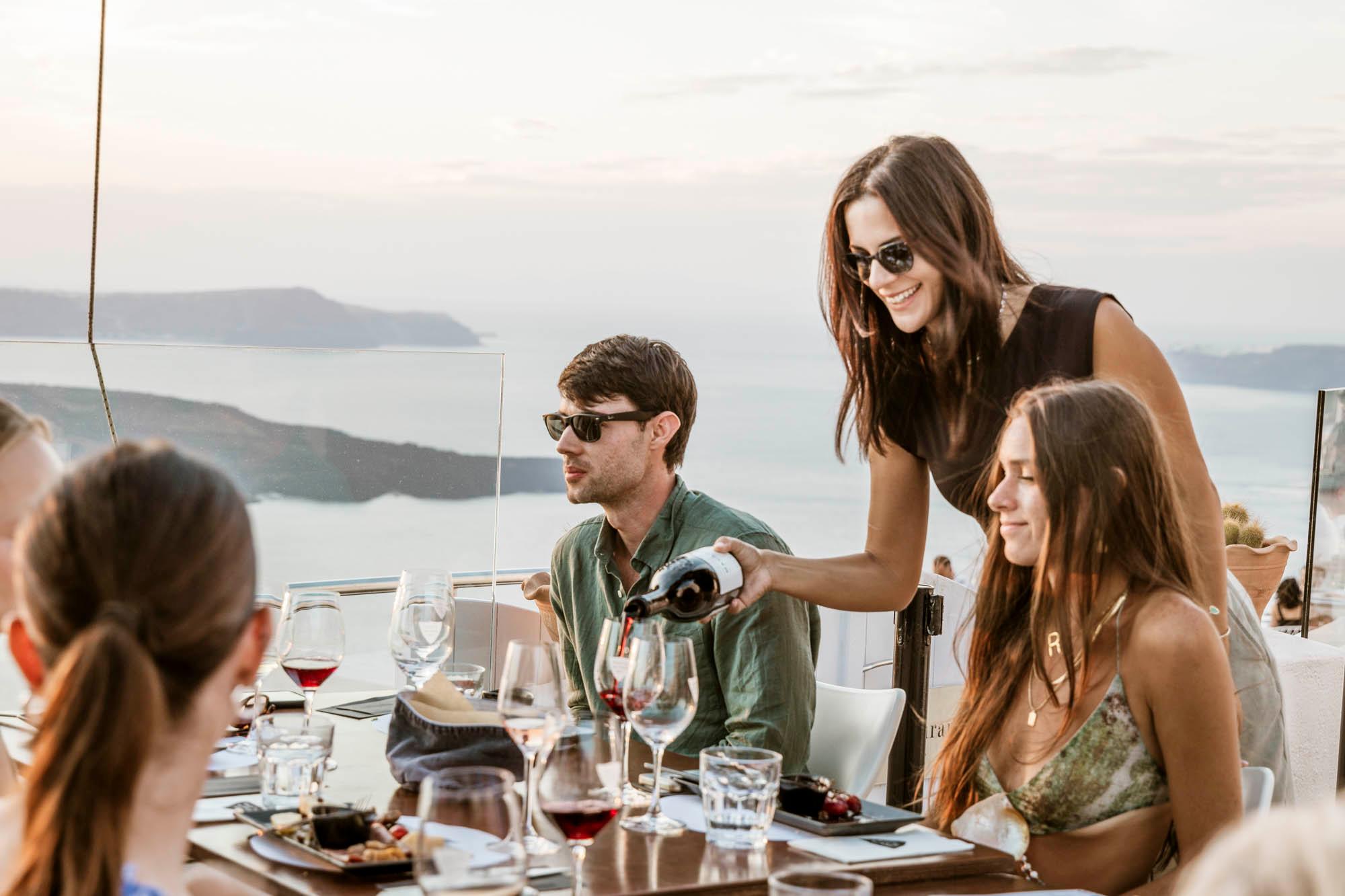
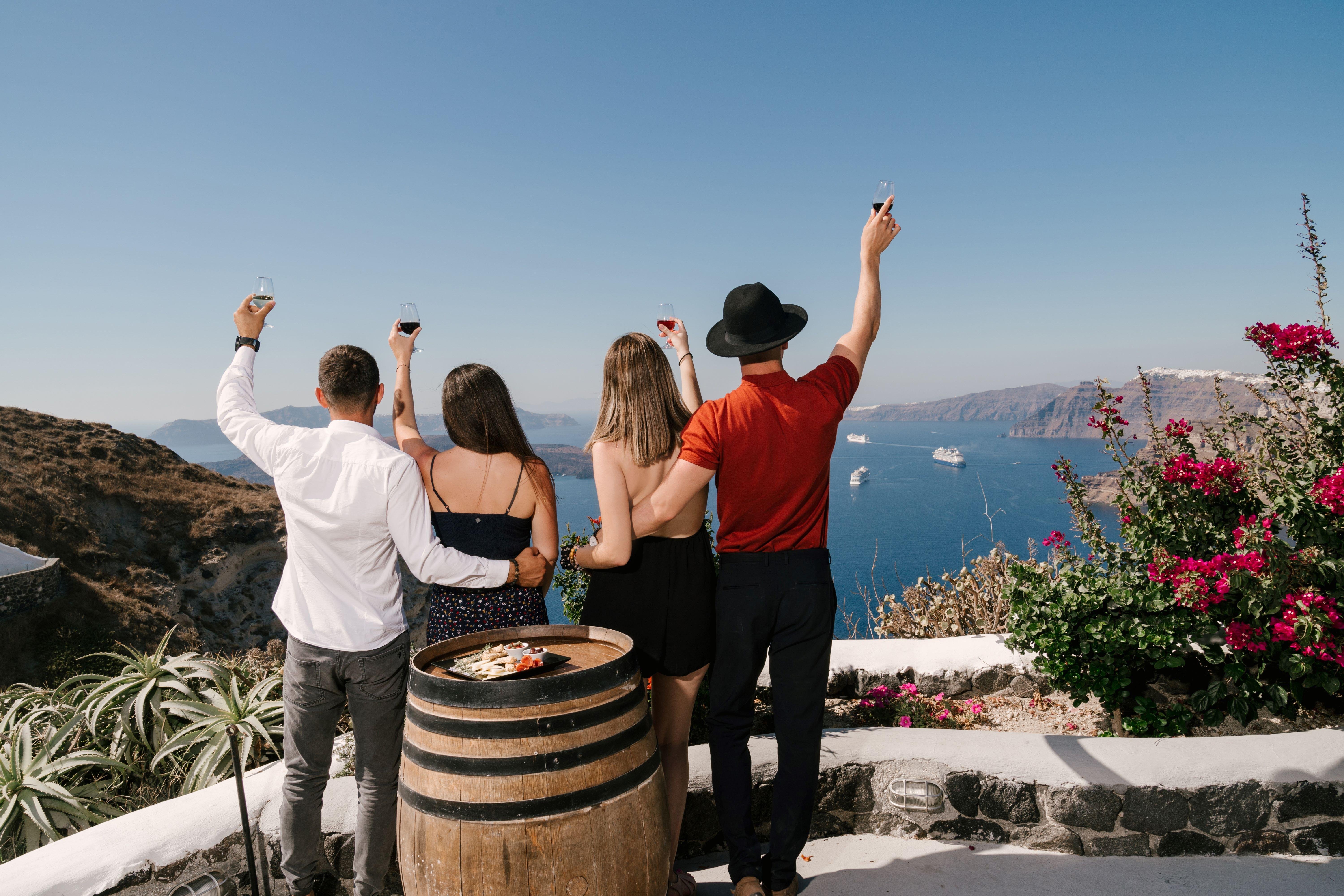
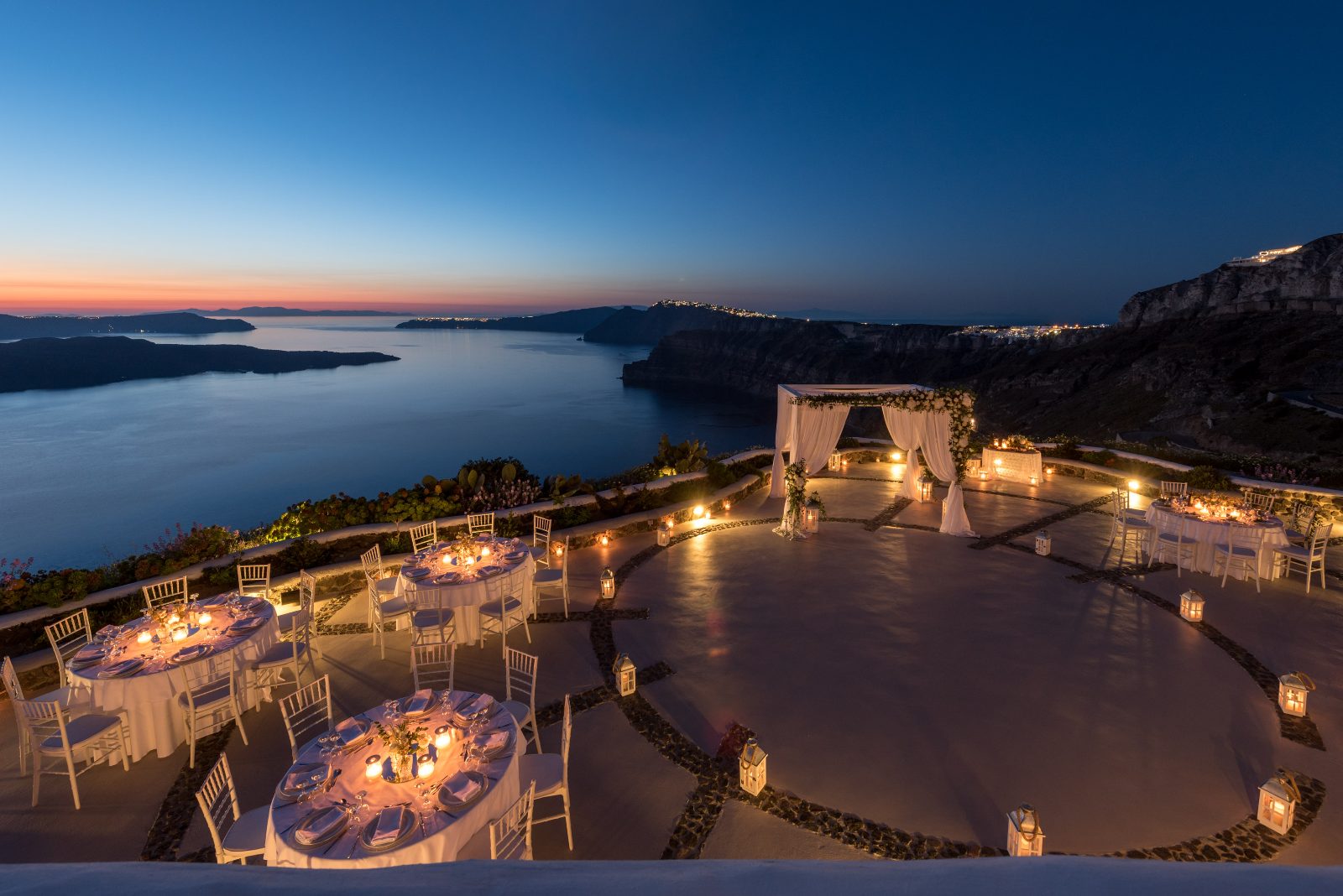
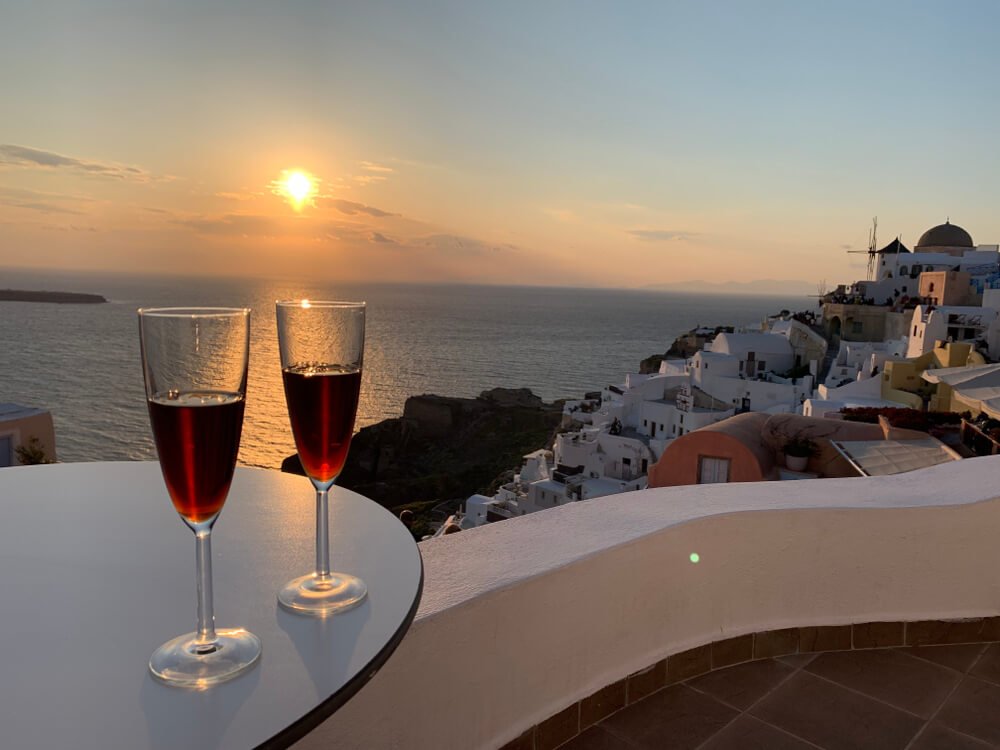
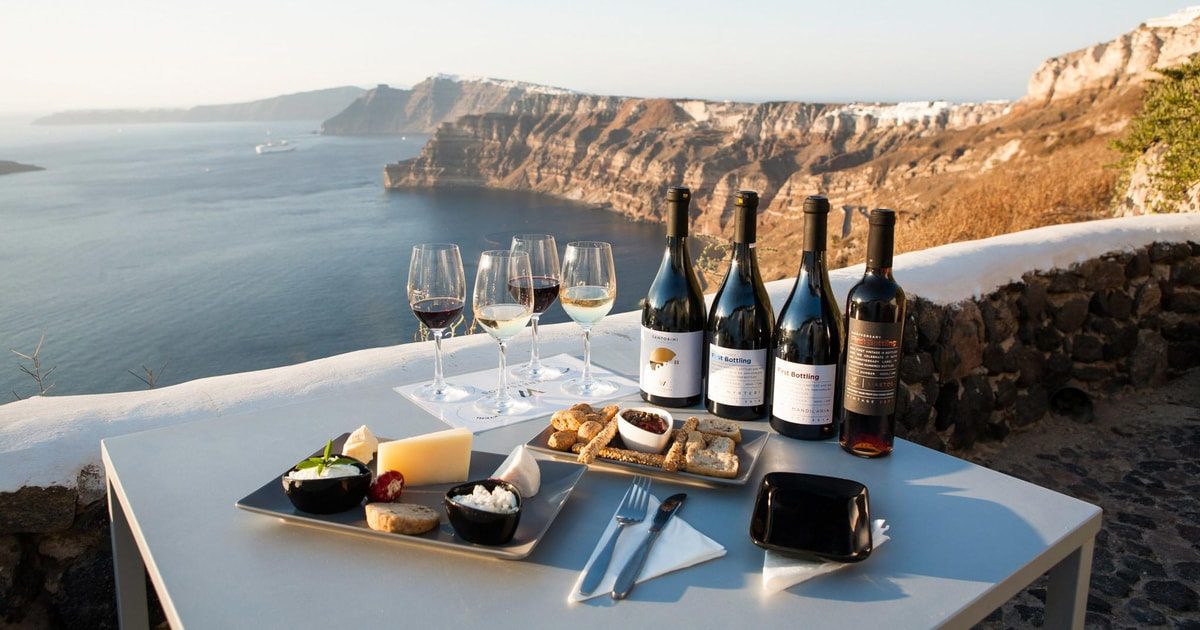
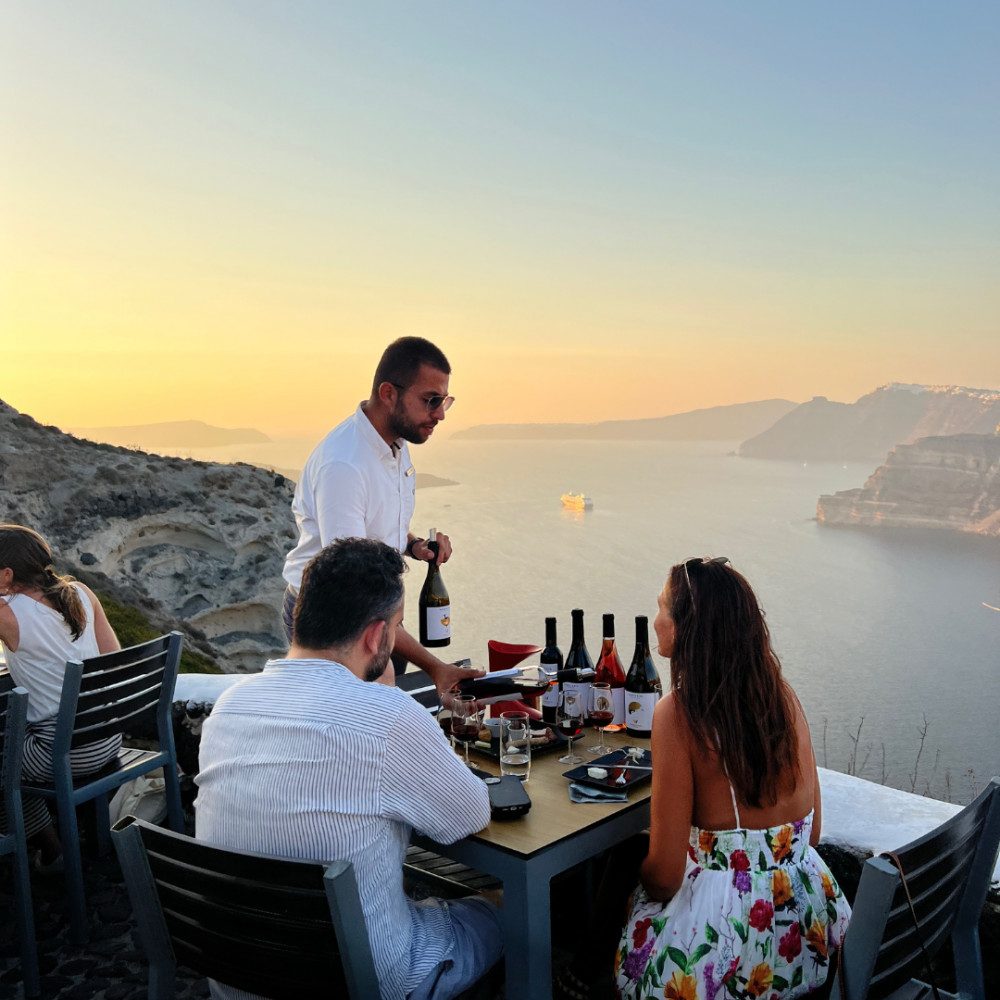
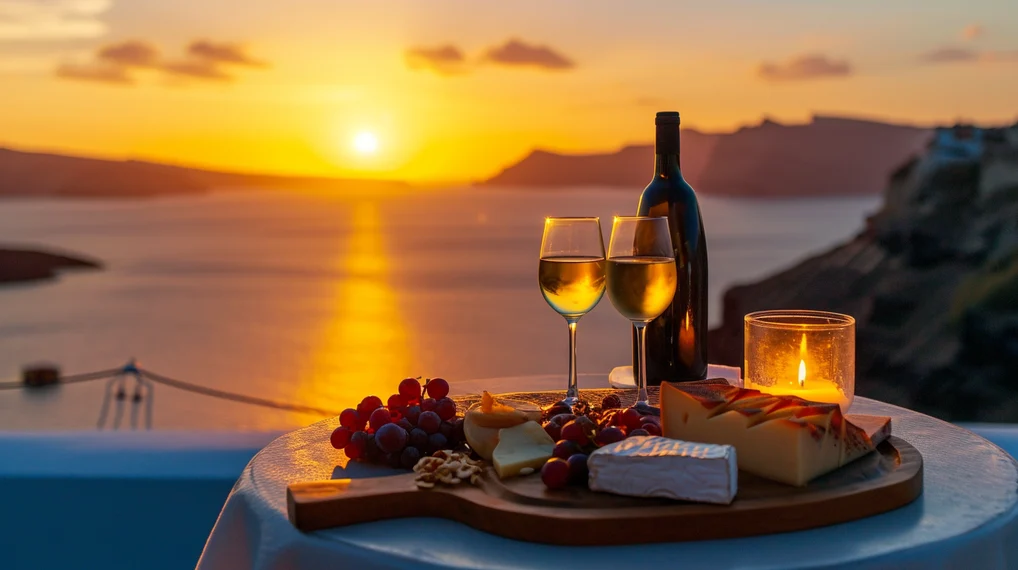
By 18:30 you reach Oia, its white-washed alleys crowded with tripods and selfie sticks. Your group claims a reserved spot at a clifftop bar, glasses of Vinsanto — Santorini's amber dessert wine — in hand as the sun drops behind Thirasia. The caldera glows copper, then violet, and the liquid in your glass shifts from gold to bronze in the fading light.
All the details about your upcoming adventure in one place
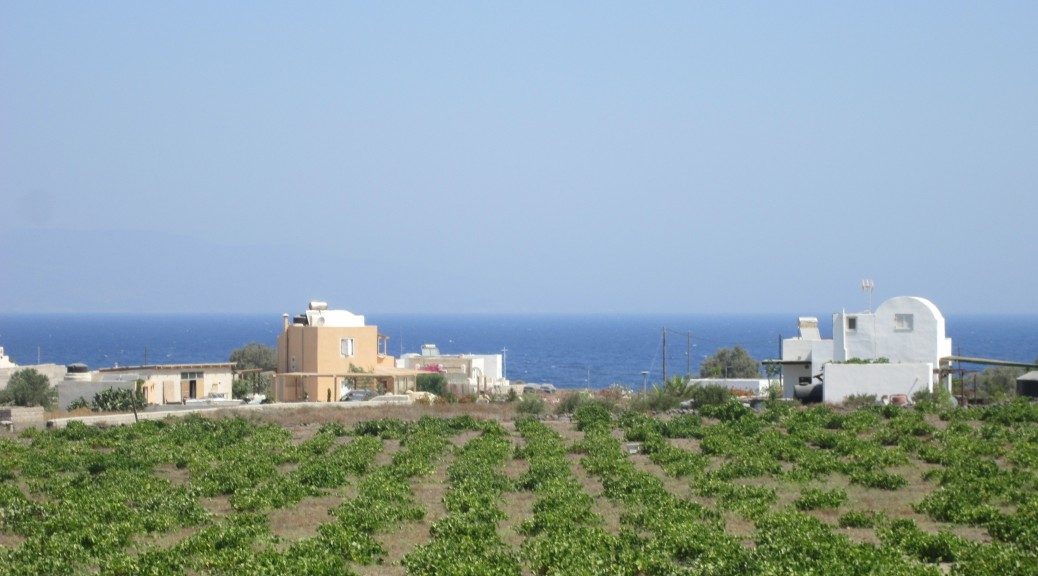
Santorini's vineyards grow in hollows scraped from volcanic ash, their vines coiled into low baskets called kouloura to shield grapes from Meltemi winds that gust forty kilometers per hour across the caldera rim.
The island produces Assyrtiko, a white varietal whose roots burrow three meters through pumice to reach moisture, yielding wines with saline minerality and citric acidity unmatched elsewhere in the Cyclades. Phylloxera never reached these ash fields — Santorini's vines are ungrafted, some over two hundred years old, their genetics identical to specimens cultivated before the pest reshaped European viticulture in the 1860s.
Three wineries anchor the island's production: Santo Wines overlooks the caldera from a terraced cliff in Pyrgos, its cooperative founded in 1947 now processing fruit from twelve hundred growers across thirty-six hundred hectares. Estate Argyros in Episkopi Gonia farms seventy hectares of single-vineyard Assyrtiko, its cellars carved into tufa stone that maintains fifteen-degree temperatures year-round. Venetsanos Winery, perched on the caldera's southern edge near Megalochori, was the island's first industrial press when it opened in 1947, gravity-fed from hilltop vineyards through stone channels still visible in the tasting room's glass floor panels.
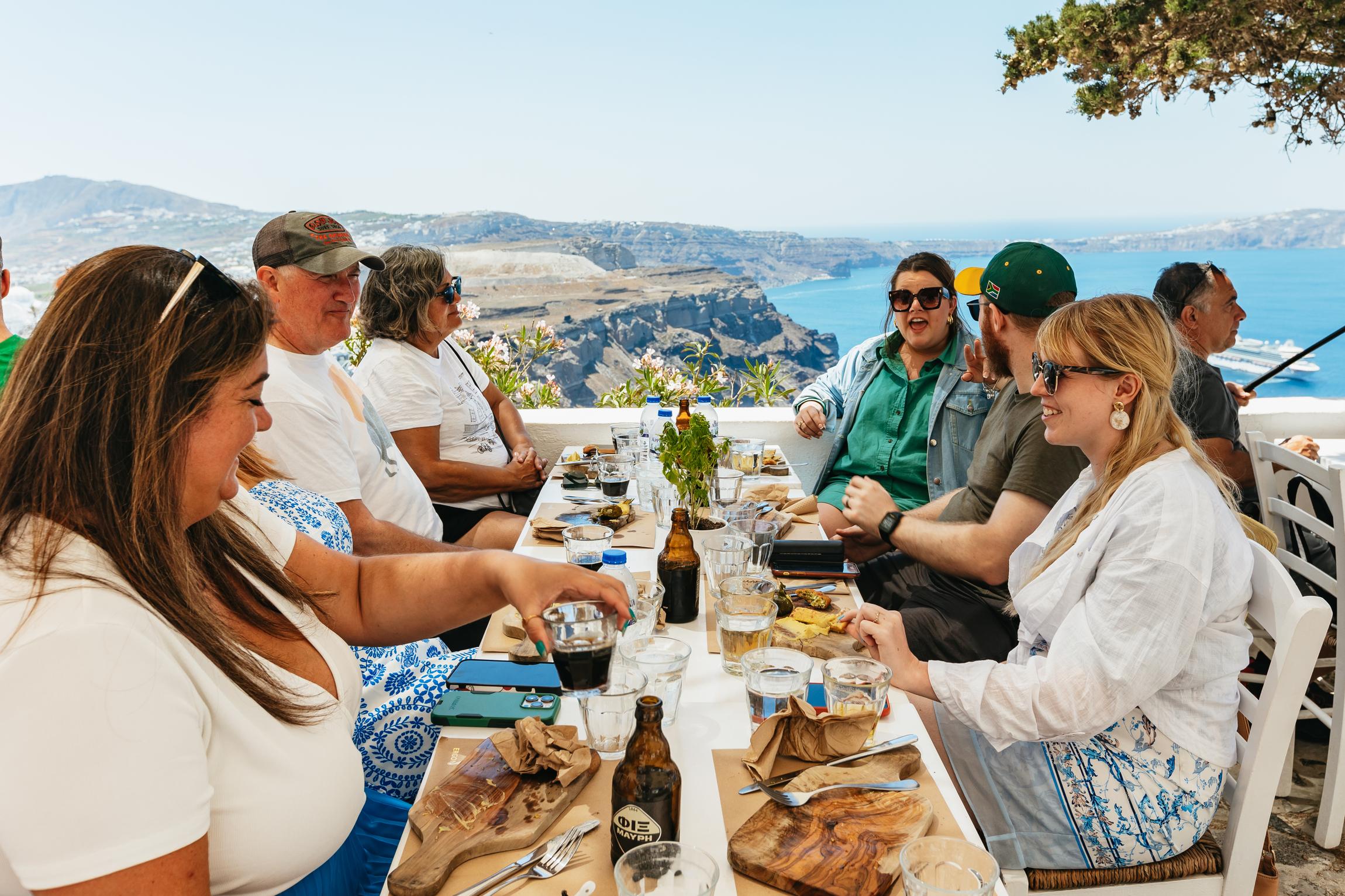
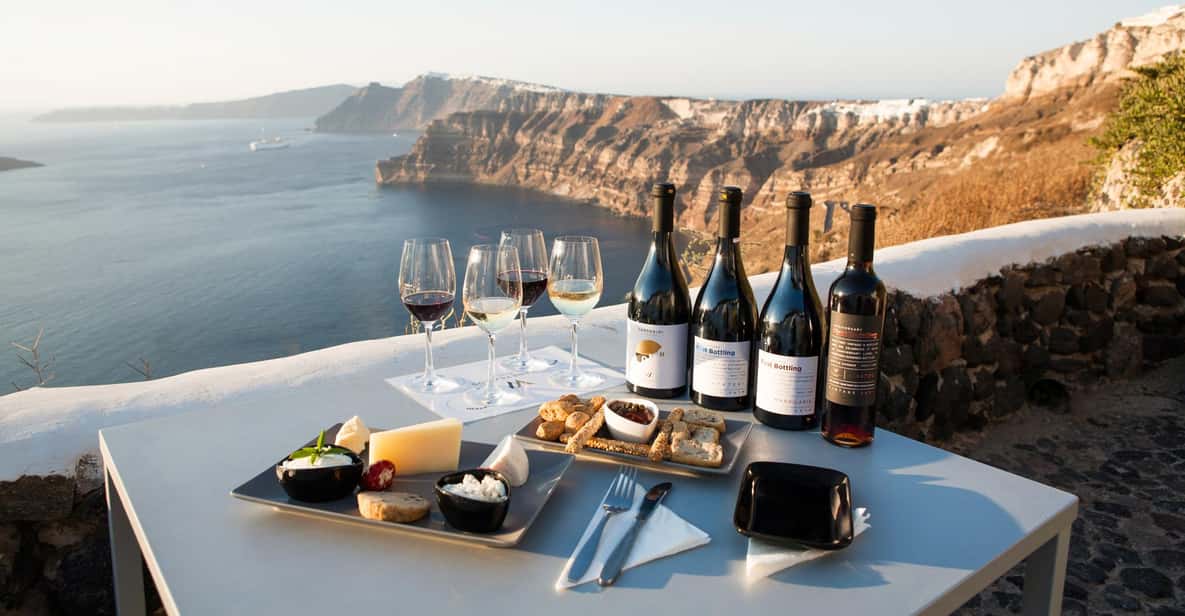
Santorini wine and food tour experiences pair cellar visits with meze plateaus: fava dip milled from yellow split peas grown in the island's ash soil, tomato fritters made from cherry varieties no larger than a thumb, capers harvested wild from cliff faces above Akrotiri. Most tours conclude at Oia's western promenade as the sun descends behind Thirasia Island, the caldera water shifting from cobalt to copper in the hour before dusk. The volcanic soil that strangles conventional agriculture produces twelve grape varieties here, their combined output rarely exceeding two million bottles annually — scarcity that keeps Santorini labels scarce on export markets but ubiquitous in Athens tavernas.
Full-day itineraries typically visit three estates between 10:00 and 19:00, covering the island's twenty-kilometer spine from Pyrgos to Akrotiri. Smaller sunset-focused excursions concentrate on a single winery paired with an Oia viewing point, their schedules timed to the September golden hour that arrives near 19:30. Tasting fees average fifteen to twenty-five euros per person per winery, separate from transport and guiding costs.

Phylloxera never reached these ash fields — Santorini's vines are ungrafted, some over two hundred years old.
Smart casual attire is recommended for a santorini wine and food tour. Comfortable walking shoes are advised for traversing vineyard terrain.
Small personal bags are permitted during a santorini wine and food tour. Large luggage should be left at your accommodation as space in tasting rooms is limited.
Photography is generally permitted for personal use during a santorini wine and food tour. Respect privacy when other guests are present.
The santorini wine and food tour is primarily an adult-focused experience. Check with specific operators regarding policies for minors.
Many locations on a santorini wine and food tour feature uneven surfaces or stairs. Contact individual operators if specific mobility assistance is required.
Outside food and beverages are not permitted during the santorini wine and food tour. Local delicacies are provided as part of the scheduled tastings.
Opening Hours
10:00–19:00
Address
Santorini Island, Cyclades, Greece
Accessibility
Varies by winery infrastructure
Arrival Window
10:00–12:00
Storage
Not available at wineries
Navigation
Local transport or private transfer
Full refunds are typically available for cancellations made at least 24 hours in advance. No general admission is charged, so no entrance fee refund is required.
Recommended time
4-5 hours
A comprehensive santorini wine and food tour typically requires four to five hours to enjoy multiple vineyard estates and local gastronomy. Visitors should account for transport between volcanic soil vineyards and cellar door queues, which fluctuate significantly by midday. If you wish to linger over pairings or secure santorini wine and food tour tickets during peak afternoon hours, prepare for slower service and higher crowd density. Exploring these Cycladic landmarks early allows for a more relaxed experience before the afternoon surge.
Crowd levels through the day
Santorini's wine tradition stretches back more than three thousand years, beginning when Phoenician traders introduced vines to the volcanic island around 1500 BCE. The catastrophic eruption that buried Akrotiri in ash paradoxically gifted future vintners with mineral-rich pumice soil and the necessity of innovation. By the Byzantine period, local growers had developed the kouloura—a basket-shaped vine training system that coils canes close to the ground, shielding grapes from fierce Aegean winds and preserving precious moisture in an island with minimal rainfall. This technique survives today as one of the oldest continuous viticultural practices in Europe. Venetian rule from the thirteenth century brought commercial expansion. Merchants shipped sweet Vinsanto wine across the Mediterranean, and by the seventeenth century, Santorini's fortified whites rivaled those of Madeira and Malmsey. Phylloxera devastated European vineyards in the 1860s, yet Santorini's ungrafted, pre-phylloxera vines endured, protected by volcanic sand that the root louse could not penetrate. When the island's population collapsed after the 1956 earthquake, many terraces were abandoned, and wine production nearly disappeared. Revival began in the 1980s when a handful of families replanted ancestral plots and a new generation of oenologists recognized the value of indigenous Assyrtiko, Athiri, and Aidani varieties. Modern santorini wine and food tour experiences emerged in the early 2000s as boutique wineries opened tasting rooms with caldera views, pairing volcanic wines with local products like fava, cherry tomatoes, and white eggplant. By 2010, protected designation of origin status formalized quality standards, and santorini wine and food tour tours now attract fifty thousand visitors annually. The island hosts fourteen active wineries, several occupying cave cellars carved centuries ago, where Assyrtiko ferments in stainless steel beside terracotta amphorae—a dialogue between ancient rootstock and contemporary technique.
Phoenician traders introduce viticulture to Santorini, planting the island's first vines
Kouloura vine-training method develops to protect grapes from wind and conserve moisture in volcanic soil
Venetian merchants export sweet Vinsanto across the Mediterranean, establishing commercial wine trade
Phylloxera epidemic spares Santorini; ungrafted pre-phylloxera vines survive in volcanic sand
Earthquake triggers mass emigration; vineyards abandoned and wine production collapses
Families replant ancestral plots; oenologists revive indigenous Assyrtiko, Athiri, and Aidani varieties
Boutique wineries open tasting rooms; protected designation of origin status awarded in 2010
Fourteen active wineries host santorini wine and food tour tickets, blending ancient techniques with modern winemaking
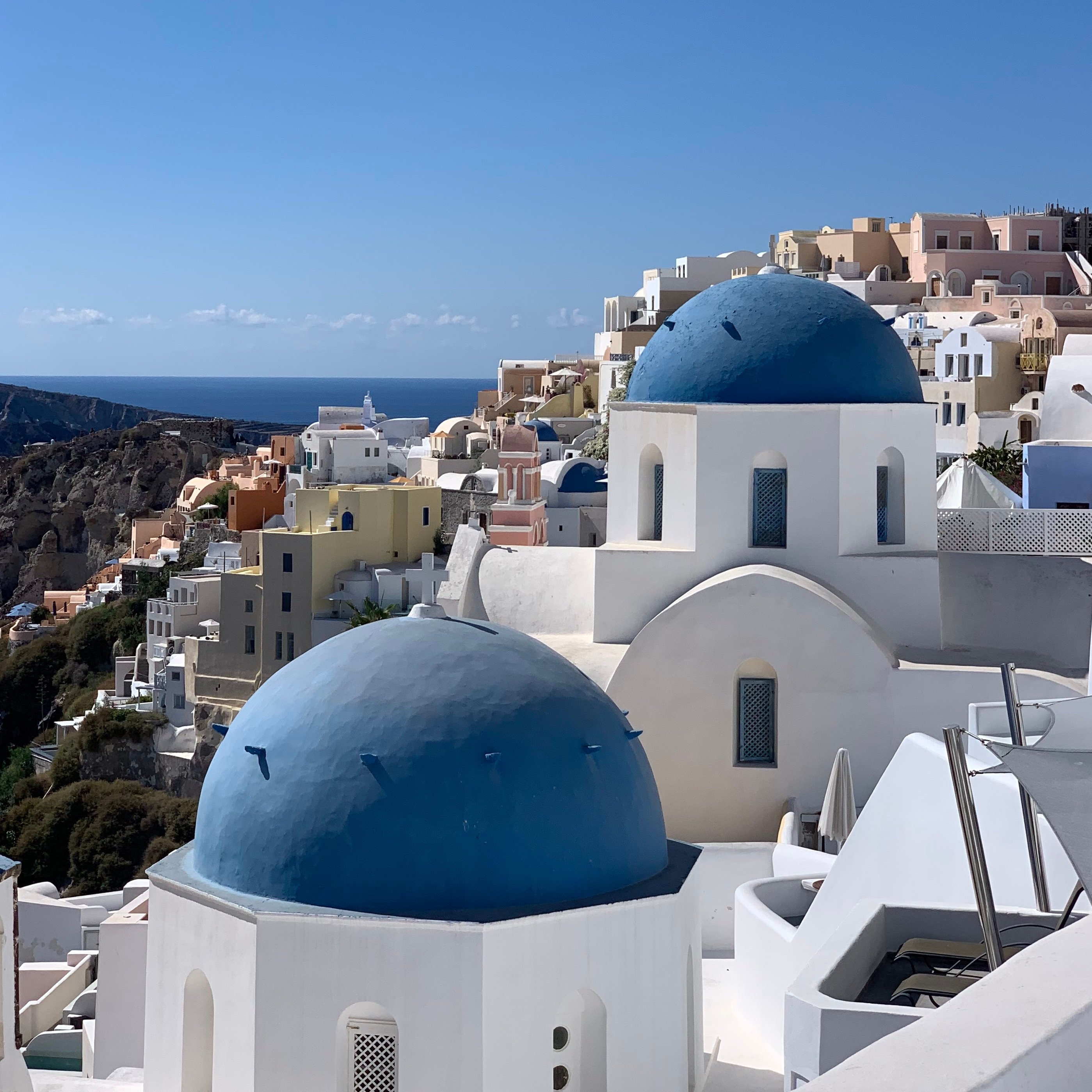
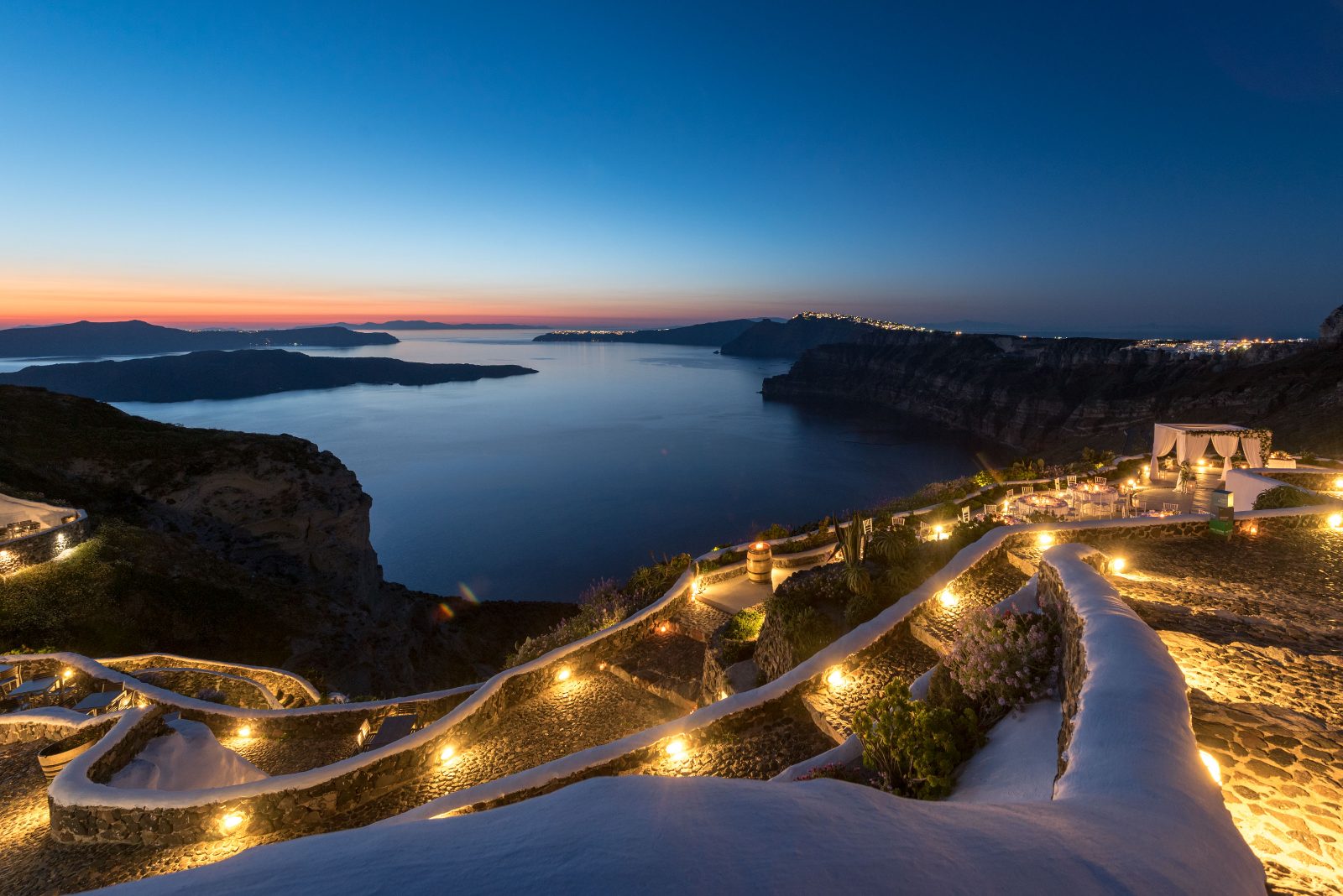
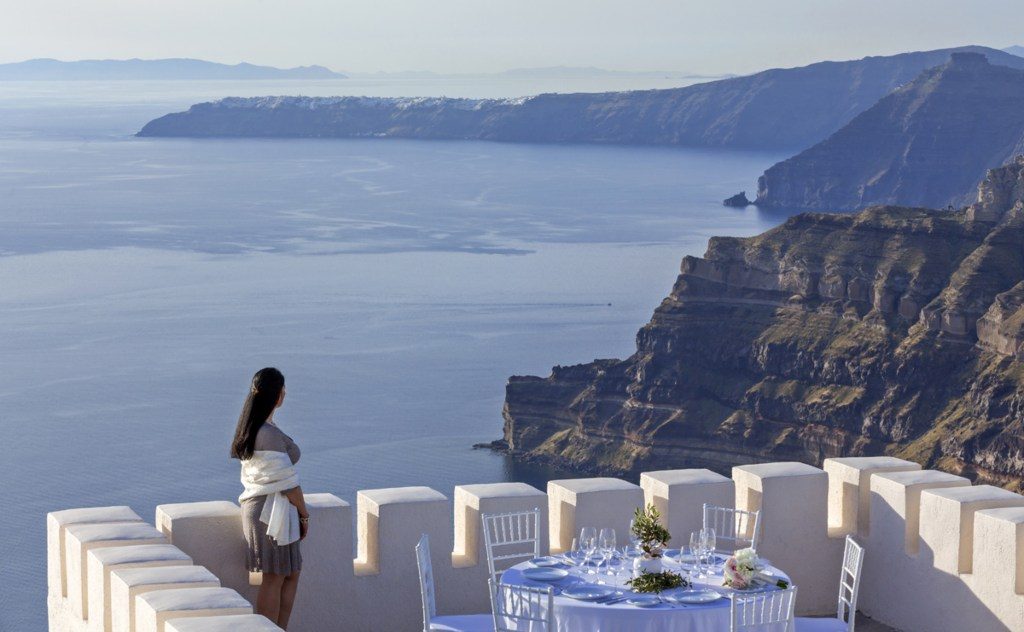
Stand at the edge of the stone balcony for a panoramic view of the volcanic caldera and Aegean sea, perfectly framing the distinct architecture of your santorini wine and food tour.
Position yourself near the lower railings to capture the contrast between the white-washed buildings and the deep blue water, often highlighted in popular santorini wine and food tour tours.
Capture the symmetrical lines of the traditional vine training methods and the sleek, modern glass structures that define this local viticulture center, often featured in a santorini wine and food tour tour.
Focus your lens on the weathered volcanic rock and rustic wooden barrels found in the subterranean storage areas, providing a textured backdrop often requested for santorini wine and food tour tickets.
Planning a santorini wine and food tour requires careful coordination, as the volcanic terrain and vineyard settings present unique challenges for parents. While many Santorini wineries offer outdoor space, the primary focus remains on adult-oriented viticulture rather than child-centric entertainment.
The traditional volcanic paths and terraced landscapes are often uneven, making standard strollers difficult to navigate; a carrier is recommended for your santorini wine and food tour tour.
These visits are generally better suited for older children or teens who can manage quiet periods, as there are few dedicated play areas for toddlers during these santorini wine and food tour tours.
Most estates lack baby-change stations or specific nursery amenities, so visitors should prepare for basic services when booking santorini wine and food tour tickets.
To avoid heat and crowds, families should plan their visit within the 10:00–12:00 arrival window, ensuring a relaxed pace before the afternoon peak.
While some estates offer artisanal platters featuring local Greek cheese and olives, parents should bring preferred snacks for younger children to supplement the limited culinary options available on-site.
Dining options near your santorini wine and food tour are primarily found within the nearby villages or integrated directly into the estates. Many venues specialize in pairing indigenous Assyrtiko grapes with local cycladic cuisine.
Tucked away in Exo Gonia, this local favorite offers traditional flavors using volcanic soil produce. It is ideal for those finishing their santorini wine and food tour tours with a slow dinner.
Located at a historic winery, this venue elevates classic Greek ingredients to a gourmet level. Reservations are recommended for those seeking formal santorini wine and food tour tickets.
This spot provides a casual atmosphere with expansive terrace views perfect for reviewing your santorini wine and food tour tour experience. Focus on the fava and fresh seafood dishes.
Everything you need to know for your journey
Wineries are open from 10:00 to 19:00 daily. Please plan your santorini wine and food tour accordingly.
There is no general admission fee (0 EUR), though tasting fees apply per person. This applies to all visits during your santorini wine and food tour.
We recommend arriving between 10:00–12:00. This helps avoid peak crowds during your santorini wine and food tour.
Policies vary by operator, but most experiences are tailored for adults. Verify details before purchasing santorini wine and food tour tickets.
Outside food is restricted during the santorini wine and food tour. Refreshments are provided as part of the programmed tastings.
Yes, many operators provide customized santorini wine and food tour tour options. Check individual listings for private availability.
Smart casual attire and comfortable footwear are recommended for the santorini wine and food tour. The terrain can be rocky.
Accessibility depends on the specific winery visited. Please confirm accessibility features when securing your santorini wine and food tour tickets.
You can book santorini wine and food tour tickets directly through our platform. Review the provided tour descriptions for specific inclusions.
Join thousands of happy travelers who have discovered this incredible experience
Book Your Experience Now